- By Dr. Ravali Yalamanchili
- 2026-11-06
Skin tags are small, soft growths that often appear on the neck, underarms, eyelids, or other areas where skin rubs together. Although they are usually harmless, they can cause discomfort or become bothersome when they catch on clothing or jewelry.
Skin tag removal can help address these concerns through safe, dermatologist-recommended methods. Did you know that skin tags are more common in areas with repeated friction? Understanding the available treatments and proper aftercare can help you make an informed decision.
Key Takeaways:
Skin tags are usually harmless, but a changing or bleeding growth needs medical assessment.
Cryotherapy, cauterization, laser treatment, and surgical removal are common treatment options.
The best method depends on the growth's size, location, and appearance.
Keeping the area clean and avoiding picking can support recovery.
Home removal attempts can lead to infection, bleeding, or scarring.
A qualified dermatologist can confirm the diagnosis and recommend suitable treatment.
What Are Skin Tags, and Why Do They Develop?
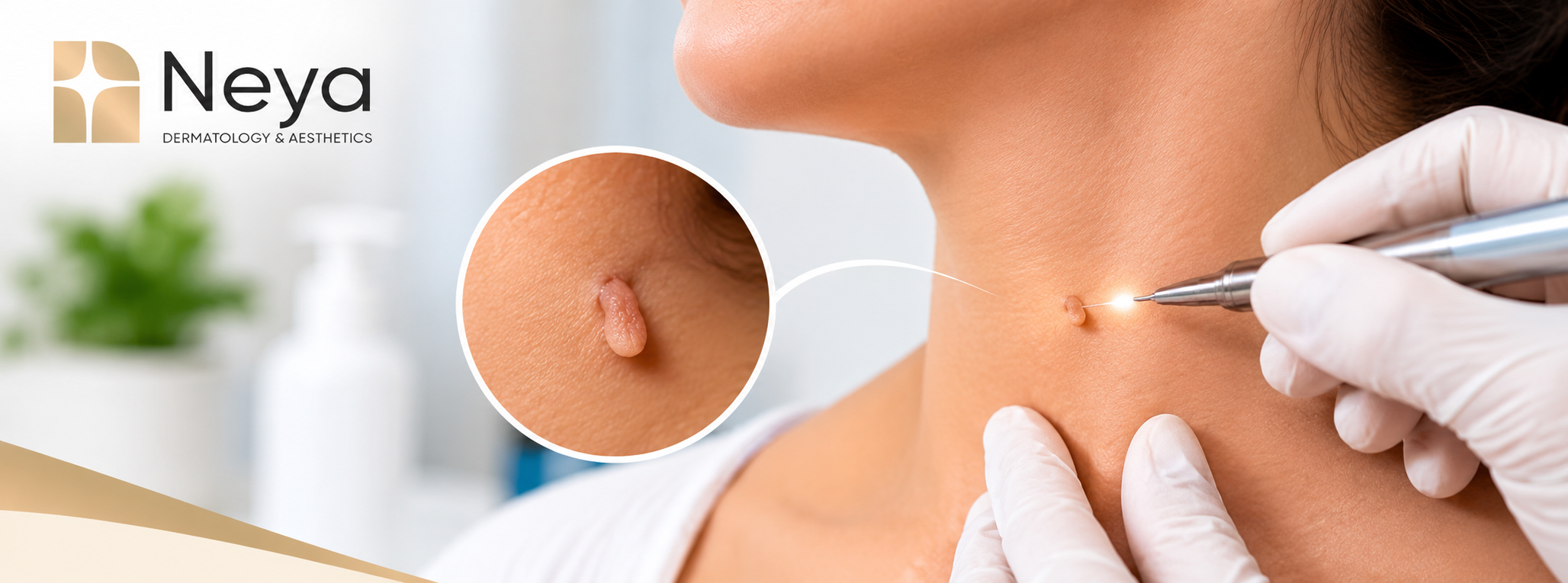
Skin tags are small, noncancerous growths that appear as soft, flesh-colored or slightly darker bumps on the skin. They commonly develop on the neck, underarms, eyelids, groin, and under the breasts, especially in areas where skin rubs together.
Skin tags may develop due to friction, aging, genetics, or certain metabolic factors. They are also more common in people with insulin resistance. Most skin tags are harmless and do not require treatment unless they cause discomfort, bleed repeatedly, or create cosmetic concerns.
When Should You Consider Professional Skin Tag Removal?
Consider treatment if a skin tag causes discomfort, catches on clothing, or affects your confidence. A dermatologist can examine it and recommend a suitable method based on its size and location.
For skin tag removal in Hyderabad, choose a qualified dermatologist who can confirm the growth and explain treatment options. The best skin specialist in Hyderabad can also discuss expected results, possible side effects, and recovery.
Seek medical advice if a growth:
- Changes rapidly in size, shape, or color
- Bleeds without an obvious reason
- Becomes painful or develops persistent irritation
- Looks unusual or differs from your other skin tags
- Does not resemble a typical skin tag
These changes do not necessarily indicate a serious problem, but they should be evaluated before any removal procedure.
Which Skin Tag Removal Methods Are Available?
The right treatment depends on the size, thickness, location, and number of skin tags. Dermatologists may use one of the following methods after examining the affected area.
1. Cryotherapy
Cryotherapy uses liquid nitrogen to freeze skin tags, causing the treated tissue to dry out and fall off naturally. Temporary redness, mild stinging, or blistering may occur. Smaller skin tags may need one or more treatments, depending on their size.
2. Cauterization
Cauterization uses controlled heat or electrical energy to remove skin tags by carefully treating the growth and its base. Recovery is usually quick, but mild redness, tenderness, or scabbing may occur. Proper aftercare helps protect the treated skin.
3. Laser Treatment
Laser treatment uses focused light energy to remove skin tags precisely, making it suitable for some visible areas. Results depend on skin type and tag location. Temporary redness or pigment changes may occur, so discuss potential risks with your dermatologist.
4. Surgical Removal
Surgical removal is suitable for larger or persistent skin tags. The dermatologist uses local anesthesia before removing the growth with sterile instruments. The procedure is usually quick and causes minimal discomfort. A small mark may remain, but it can fade as the skin heals.
What Happens During and After the Procedure?
The treatment process is usually straightforward. However, the exact steps depend on the selected method and the condition of your skin.
Here is what you can generally expect:
- Skin examination: The dermatologist checks the growth to confirm whether it is a skin tag.
- Treatment selection: The appropriate removal method is chosen based on your needs.
- Preparation: The area is cleaned, and local anesthesia may be used when necessary.
- Removal: The skin tag is treated using the selected technique.
- Aftercare guidance: You receive instructions on cleaning and protecting the treated area.
Most people can return to their usual activities soon after a minor procedure. However, healing time varies depending on the treatment method, the size of the growth, and your skin's response.
How Can You Care for Your Skin After Removal?
Good aftercare supports healing and helps reduce irritation. Follow your dermatologist's instructions, as the needs of a treated area can vary.
Use these practical tips:
- Keep the area clean: Gently clean the treated skin as instructed and avoid unnecessary rubbing.
- Avoid picking: Do not scratch scabs or pull at healing skin.
- Protect against sunlight: Limit direct sun exposure and use suitable sun protection once the skin can tolerate it.
- Avoid irritating products: Do not apply harsh exfoliants, acids, or fragranced products to the healing area unless advised.
- Follow wound-care instructions: Use prescribed ointments or dressings only as directed.
- Watch for changes: Contact your dermatologist if redness worsens, pain increases, or you notice pus or spreading warmth.
Mild redness, tenderness, or discomfort can occur after treatment and often improves within a few days. Healing may take longer after some procedures, so avoid assuming that every treated area will recover at the same speed.
Why Should You Avoid Removing Skin Tags at Home?
Cutting, tying, burning, or applying unverified removal products to a skin tag can cause bleeding, infection, scarring, or changes in skin color. It may also delay the diagnosis of a growth that is not actually a skin tag.
Professional skin tag removal allows a dermatologist to assess the growth and choose a suitable method. This is especially important for growths near the eyes, on sensitive skin, or in areas that bleed or become irritated easily.
Avoid using scissors, needles, or household chemicals on skin tags. If a growth is painful, bleeding, or changing, arrange a medical examination instead of attempting removal yourself.
How Can You Choose the Right Dermatologist?
Choosing a qualified professional is an important part of safe treatment. Look beyond convenience or price and consider the dermatologist's experience, examination process, and approach to aftercare.
Before booking an appointment, check whether the clinic:
- Employs a qualified dermatologist with relevant experience
- Examines the growth before recommending treatment
- Explains the benefits, limitations, and risks of each option
- Provides clear aftercare instructions
- Discusses the possibility of scarring or pigment changes
- Offers follow-up advice if healing concerns arise
If you are comparing clinics, the best skin specialist Hyderabad option for you should be based on appropriate qualifications, a careful assessment, and clear communication rather than promotional claims alone.
Get Professional Advice Before Treating a Skin Tag
Skin tags are common, and many do not need treatment. However, if a growth causes discomfort, repeated irritation, or cosmetic concerns, a dermatologist can help you understand your options.
At Dr Ravali, a professional skin assessment can guide the choice of a suitable treatment and aftercare plan. Book a consultation to discuss whether skin tag removal is appropriate for your skin and individual needs.
Frequently Asked Questions:
1. Is skin tag removal painful?
Discomfort is usually mild. Some methods may cause brief stinging or tenderness, while local anesthesia can help reduce pain during surgical removal.
2. How long does it take to heal after removal?
Minor redness or discomfort often improves within a few days. Complete healing depends on the method used, the size of the treated area, and individual skin responses.
3. Can skin tags grow back after removal?
A successfully removed skin tag generally does not grow back in the same spot. However, new skin tags may develop in other areas over time.
4. Can I remove a skin tag myself?
Home removal is not recommended because it can cause bleeding, infection, or scarring. A dermatologist should first confirm that the growth is a skin tag.
5. When should I contact a dermatologist after treatment?
Seek advice if you experience increasing pain, spreading redness, pus, persistent bleeding, or delayed healing. You should also have any new or changing growth examined.