- By Dr. Ravali Yalamanchili
- 2026-10-14
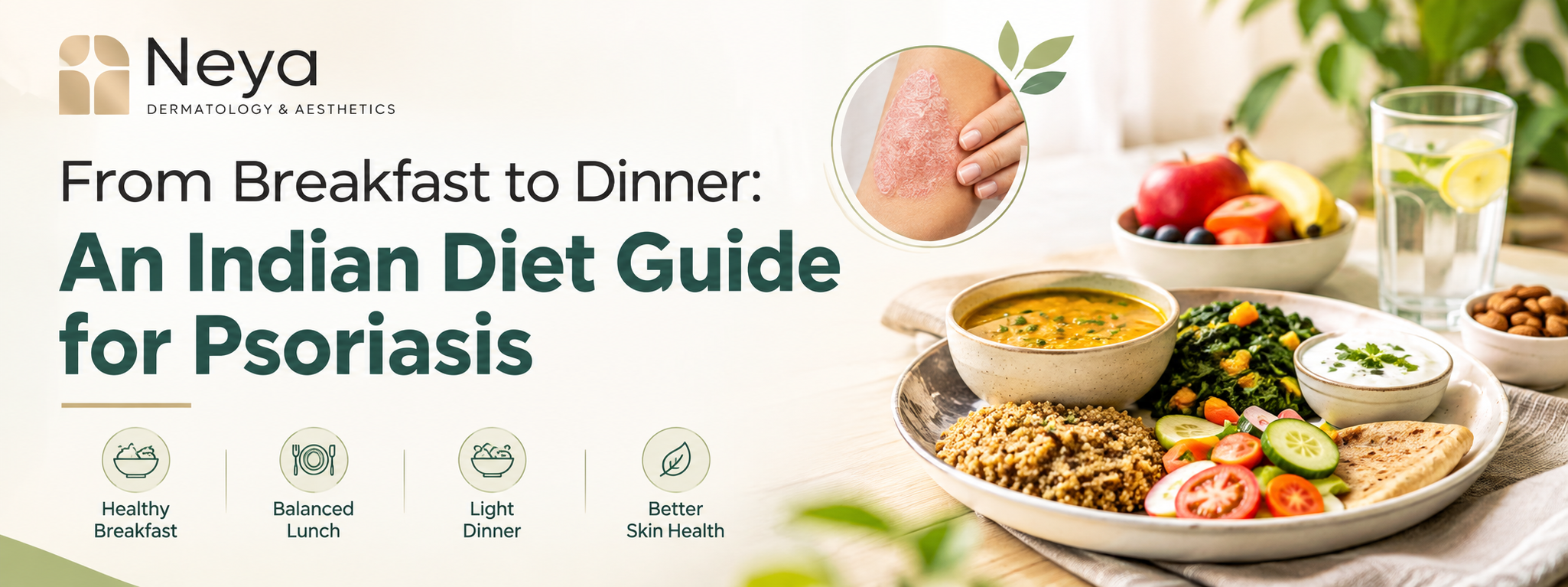
Managing psoriasis involves more than caring for your skin. Everyday food choices can support overall health and fit alongside your psoriasis treatment plan. An Indian diet can include plenty of vegetables, fruits, whole grains, lentils, nuts, and dairy without making meals complicated.
Did you know?
According to the Indian Council of Medical Research, severe psoriasis flare-ups may sometimes affect calcium levels and cause metabolic changes. Regular checks of calcium, liver function, and kidney function may therefore be needed in some cases.
Can Your Diet Affect Psoriasis?
Psoriasis is a long-term skin condition that can cause dry, itchy, and inflamed patches. Food does not cure psoriasis, but a balanced eating pattern can support your overall health.
If you are considering psoriasis treatment in Hyderabad, your dermatologist may also discuss lifestyle habits along with medical care. Your food choices can be one part of this approach.
An Indian diet plan can be easy to follow because it includes many nutritious foods such as vegetables, fruits, whole grains, lentils, beans, nuts, seeds, and dairy products.
The goal is not to follow a strict or complicated diet. Instead, focus on regular meals, enough water, and a good variety of foods.
Start Your Morning With a Balanced Breakfast
Breakfast gives you a chance to add protein, fiber, and healthy fats to your day. Choose foods that keep you full without relying heavily on sugary or highly processed options.
Try these simple choices:
- Vegetable poha with peanuts
- Oats with fruit and seeds
- Vegetable upma with curd
- Moong dal chilla with vegetables
- Whole-grain toast with paneer
- Idli with sambar and vegetables
You can also add a piece of fruit such as an apple, orange, guava, or papaya.
If you enjoy tea or coffee, keep added sugar moderate. Staying hydrated throughout the day is also important.
Make Lunch Colorful and Filling
Lunch can follow a simple formula: vegetables + protein + whole grains.
For example, you could have two chapatis with dal, a bowl of vegetables, and curd. Another option is brown rice with rajma or chana, along with a side of cooked vegetables.
This type of Indian diet plan provides a mix of carbohydrates, protein, fiber, vitamins, and minerals without making your meals difficult to prepare.
Try to include different vegetables during the week rather than eating the same ones every day.
A Simple Lunch Plate
- ½ plate: Cooked or raw vegetables
- ¼ plate: Dal, beans, paneer, or another protein source
- ¼ plate: Chapati, brown rice, or another whole grain
This simple structure can help you create balanced meals without counting every nutrient.
Choose Smart Snacks Between Meals
Hunger between meals is normal. The key is to choose snacks that add nutrition instead of filling you up with highly processed foods.
Good options include:
- A small handful of almonds or walnuts
- Fresh fruit
- Roasted chana
- Plain curd
- Makhana
- Sprouts chaat
- Vegetable sticks with a simple dip
You do not need to avoid your favorite snacks completely. Instead, try to make nutritious choices more often.
If you notice that a particular food repeatedly seems to worsen your symptoms, keep a food diary and discuss the pattern with your dermatologist rather than removing major food groups on your own.
Build a Simple Dinner
Keep dinner light and balanced with vegetables and protein. Try vegetable khichdi with curd, dal with chapati and vegetables, or paneer with sautéed vegetables and a small portion of rice.
Limit fried and highly processed foods, and choose portions based on your hunger. Remember, there is no single diet for everyone with psoriasis, as food needs can vary with lifestyle, medications, and overall health.
Foods to Include More Often
Rather than focusing only on foods to avoid, think about what you can add to your meals.
Consider including:
- Vegetables: Spinach, carrots, beans, cauliflower, bottle gourd, and other seasonal vegetables.
- Fruits: Guava, berries, oranges, apples, papaya, and other whole fruits.
- Protein: Dal, chickpeas, kidney beans, paneer, curd, nuts, and seeds.
- Whole grains: Oats, whole-wheat chapati, brown rice, and other minimally processed grains.
- Healthy fats: Nuts, seeds, and moderate amounts of plant-based oils.
These foods can help you build meals that are varied and nutrient-rich.
Foods to Limit When Possible
There is no universal psoriasis food list. However, limiting highly processed foods can support a generally healthy eating pattern.
Try to reduce:
- Sugary drinks
- Excess sweets
- Highly processed packaged foods
- Frequent deep-fried foods
- Excessively salty foods
- Large amounts of refined carbohydrates
The aim is balance, not perfection. An occasional favorite food does not mean you have ruined your diet.
What About Supplements and Skin Treatments?
Some people look for supplements or cosmetic treatments while managing their skin. However, these should not replace appropriate dermatological care.
For example, people sometimes search for glutathione injection price in India when exploring options for skin-related concerns. Glutathione injections are not a standard treatment for psoriasis, so they should not be considered a substitute for medical care.
Your dermatologist can explain which treatments are appropriate for your specific skin condition.
How to Support Your Skin Every Day?
Diet is only one part of managing psoriasis. Daily habits can also make a difference.
If you are wondering how to treat psoriasis, start by getting an appropriate diagnosis and following a treatment plan recommended by a qualified dermatologist.
You can also:
- Keep your skin moisturized regularly.
- Avoid scratching irritated areas.
- Follow prescribed medicines as directed.
- Identify and discuss possible personal triggers.
- Manage stress through healthy routines.
- Keep regular dermatology appointments when needed.
Severe or persistent symptoms may require medical treatment rather than diet changes alone.
When Should You See a Dermatologist?
You should consider professional advice if your symptoms are spreading, becoming painful, frequently returning, or affecting your daily life.
A dermatologist can assess your symptoms and recommend suitable treatment based on the severity and type of psoriasis.
If you are looking for a psoriasis clinic in Hyderabad, choose a qualified dermatology provider that can offer proper evaluation and personalized care.
At Dr Ravali, the focus is on understanding your skin concerns and creating an appropriate treatment approach rather than relying on one solution for everyone.
Make Your Daily Meals Work for You
A psoriasis-friendly eating pattern does not have to mean giving up your favorite Indian foods. Small changes can make everyday meals more balanced.
Start with one meal at a time. Add more vegetables to lunch, choose a nutritious snack, and include a good protein source at dinner.
Most importantly, remember that food is supportive, not a replacement for medical care. If you need psoriasis treatment, speak with a dermatologist who can assess your condition and guide you toward suitable options.
Key Takeaways:
- A balanced diet can support overall health while managing psoriasis.
- Indian meals can easily include vegetables, whole grains, protein, and healthy fats.
- Focus on nutritious foods instead of following unnecessarily restrictive diets.
- Keep a food diary if you suspect certain foods affect your symptoms.
- Severe psoriasis may require regular monitoring and medical treatment.
- Diet should complement, not replace, dermatologist-recommended care.
Frequently Asked Questions:
1. Is there a specific diet for psoriasis?
No single diet works for everyone with psoriasis. A balanced eating pattern with vegetables, fruits, whole grains, protein, and healthy fats can support overall health.
2. Can I eat Indian food if I have psoriasis?
Yes. You can enjoy Indian foods such as dal, chapati, vegetables, rice, paneer, curd, and beans. Focus on balanced portions and limit highly processed and heavily fried foods.
3. Should I stop eating dairy with psoriasis?
Not necessarily. Dairy does not need to be removed unless you have an intolerance, allergy, or a specific reason advised by your healthcare professional.
4. Can diet alone clear psoriasis?
Diet alone generally should not be considered a replacement for medical treatment. Psoriasis may require topical medicines, phototherapy, or other treatments depending on its severity.
5. Should I take supplements for psoriasis?
Do not start supplements without professional advice. Your dermatologist can help determine whether you have a nutritional deficiency or whether a supplement is appropriate.
If you want a personalized approach to managing your skin, Dr. Ravali can help you understand your symptoms, lifestyle factors, and suitable dermatological treatment options.