- By Dr. Ravali Yalamanchili
- 2026-09-18
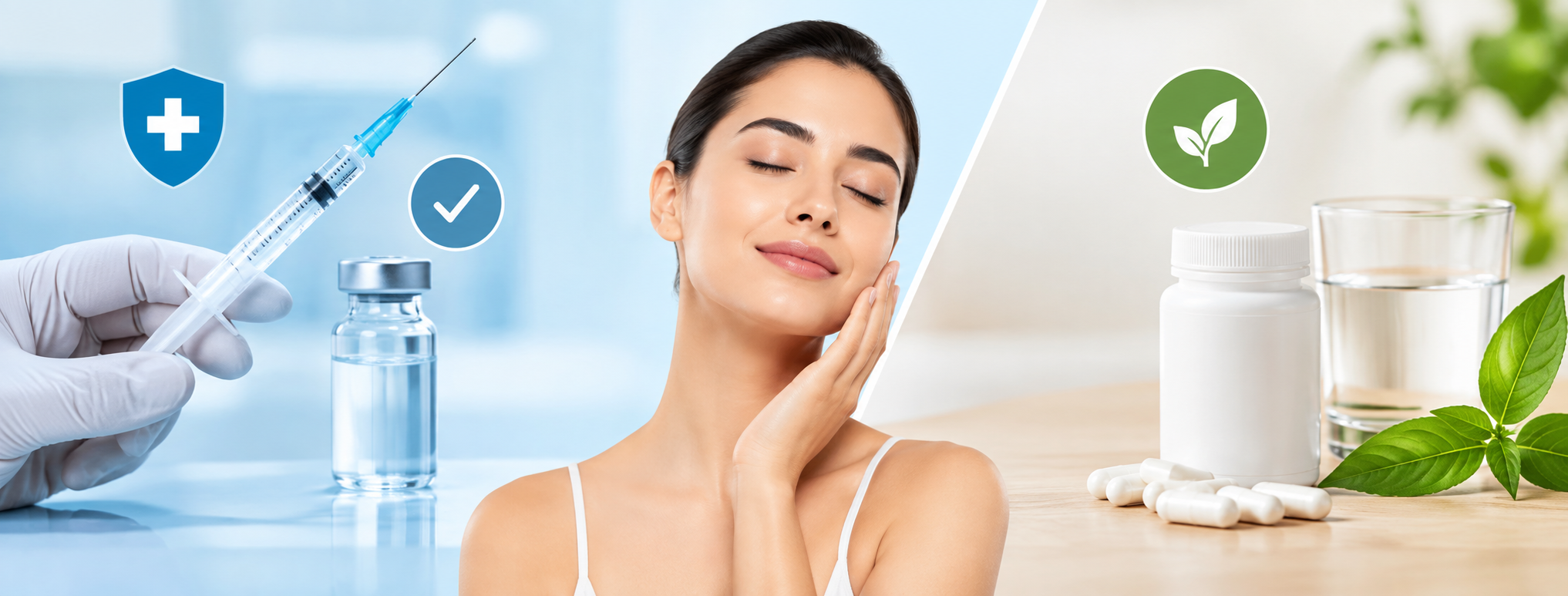
If you want to improve uneven skin tone or pigmentation, you may wonder about Glutathione Injection vs. Oral Glutathione. Understanding their differences can help you compare effectiveness, safety, and potential results.
Did you know? National Library of Medicine research suggests that oral glutathione may have limited absorption, but consistent use for 4–8 weeks may increase glutathione levels and improve certain skin properties, including melanin levels and wrinkles.
However, neither option guarantees a change in natural skin tone. Results can vary based on your skin, health, and treatment plan.
Understand How Oral and Injectable Glutathione Differ
Glutathione is an antioxidant naturally produced by the body. It helps protect cells from oxidative stress and supports several important biological processes.
The main difference between oral and injectable forms is how they are delivered.
Oral glutathione is usually available as capsules, tablets, or other supplements. It passes through the digestive system before being absorbed.
Injectable glutathione is administered by a healthcare professional. Depending on the treatment, it may be given through an injection or intravenous infusion.
Here is a simple comparison:
|
Oral Glutathione
|
Injectable Glutathione
|
|
Taken by mouth
|
Administered by a healthcare professional
|
|
Goes through the digestive system
|
Delivered through an injection or IV
|
|
Convenient to use
|
Requires a clinical setting
|
|
May require consistent use
|
Usually given according to a treatment schedule
|
|
Absorption can be limited
|
Avoids digestive absorption
|
Look at the Evidence Before Choosing
Online claims may suggest that injectable glutathione gives faster results, but evidence should guide your decision. Small studies have found that oral glutathione may affect melanin levels and some skin properties after several weeks of regular use.
However, research is limited by small sample sizes and short study periods. Evidence for intravenous glutathione is even more limited, with concerns about effectiveness and safety.
Talk to a qualified dermatologist before choosing either option.
Pay Attention to Safety and Possible Side Effects
Safety should always come first when considering glutathione treatment. Oral glutathione is generally well tolerated in short-term studies, but it may not be suitable for everyone.
Injectable treatment requires extra care because it involves a medical procedure and a sterile product. Possible glutathione injection side effects include:
- Nausea or vomiting
- Headache or dizziness
- Chills or fever
- Injection-site reactions
- Blood pressure changes
- Allergic reactions
The FDA has also reported adverse events linked to compounded IV glutathione and raised concerns about using dietary-supplement-grade glutathione for injections.
For this reason, injectable treatment should only be considered under qualified medical supervision with proper product handling.
Compare the Cost Beyond the Advertised Price
Cost is another factor people often consider when researching glutathione treatments. However, the amount advertised by a clinic may not represent the complete treatment cost.
The glutathione injection price can vary depending on the dosage, formulation, number of sessions, clinic, and whether other treatments are included.
Before booking a session, ask what the quoted price covers. You should also find out whether consultation and follow-up appointments are included.
When comparing the glutathione injection price in India, remember that prices can vary between cities and providers. A lower price should not be the main reason for choosing a treatment.
A clear treatment plan can help you understand the actual cost and avoid unexpected expenses.
Identify the Skin Concern You Want to Treat
Glutathione is often discussed in connection with brighter-looking skin, but pigmentation can have many causes.
Melasma, post-inflammatory hyperpigmentation, sun-related pigmentation, acne marks, and uneven skin tone may require different approaches.
This is why it is important to identify the underlying concern before selecting a treatment.
A dermatologist may consider:
- Your skin type
- Pigmentation pattern
- Previous treatments
- Sun exposure
- Current skincare routine
- Medications and supplements
- Allergies and relevant medical history
- Your treatment expectations
If you are looking into glutathione injection in Hyderabad, start with a professional consultation rather than choosing a treatment based only on before-and-after photographs or promotional claims.
A dermatologist can help determine whether glutathione is appropriate for your concern or whether another evidence-based option may be more suitable.
Ask the Right Questions Before an Injection
If you are considering a glutathione injection clinic in Hyderabad, ask about the product, dosage, expected results, and possible risks before treatment.
Ask about:
- Product quality: Find out where the injectable product comes from and how it is prepared and stored.
- Treatment schedule: Ask how many sessions are suggested and why that schedule has been recommended.
- Possible reactions: Make sure you understand which symptoms require immediate medical attention.
- Expected results: A responsible provider should explain that results vary and should not promise a specific skin color or outcome.
- Alternative options: Ask whether topical treatments, procedures, lifestyle changes, or other approaches may be appropriate for your concern.
When discussing glutathione injection side effects, remember that injectable treatments carry risks beyond the effects of glutathione itself. The injection procedure, product quality, sterility, dosage, and individual health can all affect safety.
Use a Personalized Approach to Skin Treatment
No single treatment works for every pigmentation concern. Oral glutathione may be convenient, but absorption can be limited, while evidence for injectable glutathione remains insufficient for reliable long-term cosmetic benefits.
A dermatologist can assess your skin, explain suitable options, and help set realistic expectations. The goal should always be healthy skin and an appropriate treatment plan, not an unrealistic change in your natural skin tone.
Choose Your Next Step With Professional Guidance
When comparing Glutathione Injection vs. Oral Glutathione, look beyond claims about faster results or lower prices. Oral glutathione has shown some potential in small studies, while injectable glutathione has limited evidence for cosmetic skin lightening and additional safety considerations.
At Dr. Ravali, a personalized consultation can help you understand your pigmentation concerns and explore suitable treatment options. The focus should be on realistic results, appropriate medical guidance, and a treatment plan that considers your individual skin needs.
Key Takeaways:
- Glutathione is an antioxidant naturally produced by the body.
- Oral and injectable glutathione use different delivery methods.
- Some studies have reported pigmentation-related changes with oral glutathione.
- Evidence for injectable glutathione as a cosmetic skin-lightening treatment remains limited.
- Injectable treatment has additional risks related to administration and product sterility.
- Cost can vary based on dosage, formulation, clinic, and number of sessions.
- A dermatologist can help you choose an approach based on your skin concern and medical history.
Frequently Asked Questions:
1. Which is better, oral or injectable glutathione?
There is no universally suitable option. Oral glutathione has some clinical research supporting potential changes in pigmentation, while evidence for injectable glutathione remains limited. Your dermatologist can help you understand which options may be appropriate for your needs.
2. How long does oral glutathione take to show results?
Some studies have observed changes after approximately four to eight weeks of consistent use. However, individual results can vary, and research has used different doses and treatment periods.
3. Are glutathione injections completely safe?
No medical treatment is completely risk-free. Injectable glutathione may cause reactions such as nausea, dizziness, headache, chills, or injection-site reactions. Product quality and sterile preparation are also important safety considerations.
4. Can glutathione permanently lighten the skin?
There is not enough strong evidence to conclude that glutathione can safely and permanently change natural skin color. Results, when reported, can vary between individuals.
5. Should I take glutathione without consulting a doctor?
It is better to discuss any supplement or injectable treatment with a qualified healthcare professional first. This is especially important if you have an existing medical condition, take medications, or are considering injectable treatment.