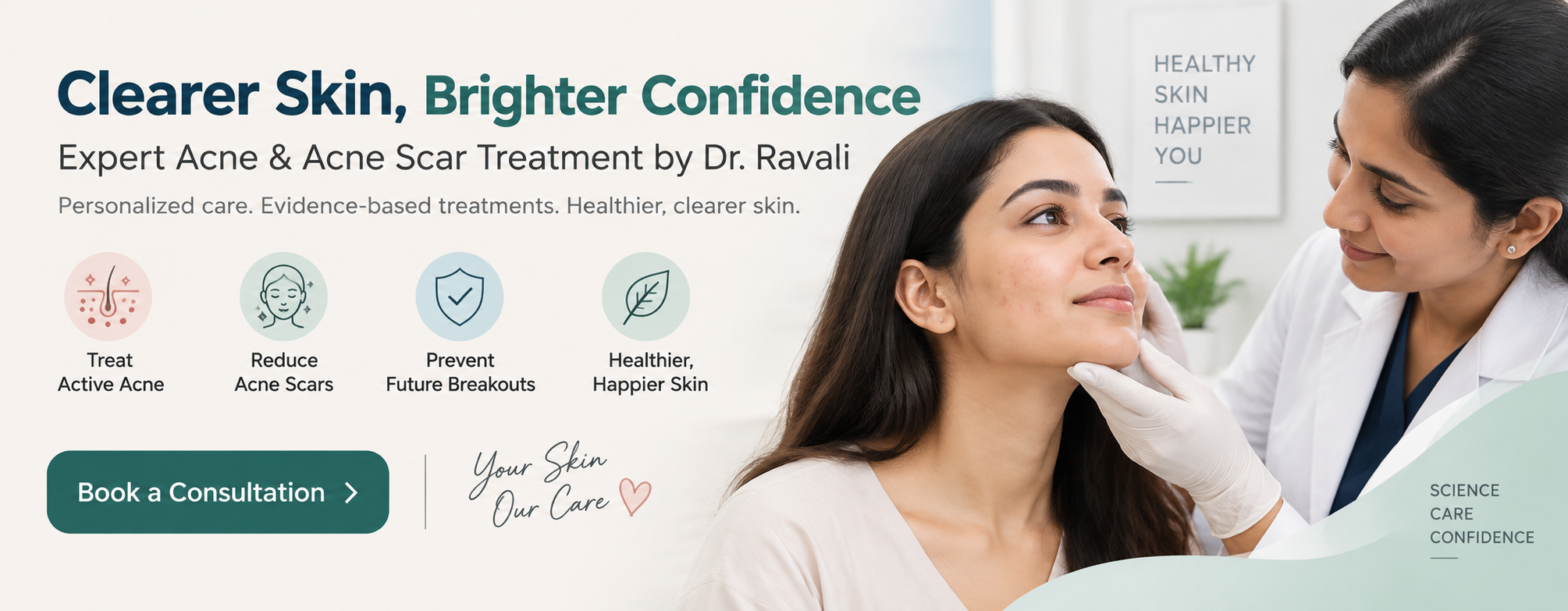
- By Dr. Ravali Yalamanchili
- 2026-09-18
Acne can be frustrating, especially when breakouts keep returning or leave behind dark spots and uneven texture. The good news is that you do not have to manage persistent acne alone.
A dermatologist can identify the type and severity of your acne and recommend treatment based on your skin. This personalized approach can help you treat acne and acne scars while reducing the chances of new scars developing.
Did you know? According to the American Academy of Dermatology (AAD), acne is the most common skin condition in the United States, affecting nearly 50 million people each year. It affects about 85% of adolescents and can also continue or begin during adulthood, particularly in women.
Begin With a Detailed Skin Assessment
Before choosing a treatment, a dermatologist first examines your skin, acne, marks, and scars. They may also review your skincare routine and previous treatments.
This helps create a plan based on your specific concerns. If you are considering acne scar treatment in Hyderabad, an assessment can identify whether you have pigmentation, depressed scars, raised scars, or a combination.
Those looking for skin tag removal in Hyderabad can also discuss suitable removal options during a consultation.
Understand Why Your Acne Keeps Coming Back
Acne can have several causes, so treating the visible pimple may not be enough. Hormonal changes, excess oil, clogged pores, inflammation, genetics, certain medications, and some skincare products can all contribute.
Adult acne is also common and can continue into your 30s, 40s, or 50s. Understanding these factors helps a dermatologist identify possible triggers and choose a suitable treatment plan.
Match the Treatment to Your Type of Acne
Not every breakout needs the same treatment. Blackheads may need a different approach than painful or deep acne.
Based on your condition, a dermatologist may recommend topical medicines, prescriptions, or in-office treatments.
Your treatment plan may include:
Topical treatments
These are applied directly to the skin and may help unclog pores, reduce inflammation, or control new breakouts.
Prescription medicines
Moderate or severe acne may require medication that is stronger than typical over-the-counter products.
In-office treatments
Certain procedures, including chemical peels, laser or light treatments, or acne extraction, may be considered for appropriate patients.
Maintenance care
Once acne improves, continuing an appropriate routine can help manage future breakouts.
Control Active Acne Before Focusing on Scars
Imagine trying to repair a wall while new cracks are still forming. Acne scars can be approached similarly.
If active acne continues to appear, new inflammation can create additional marks or scars. That is why dermatologists often focus on controlling breakouts before beginning scar-focused procedures. The AAD also recommends getting acne under control before treating acne scars.
One of the simplest things you can do is avoid picking or squeezing pimples.
When you pick at acne, you can increase inflammation and raise the risk of scarring. Deep and painful acne is also more likely to leave scars.
Simple rule: Treat the breakout instead of trying to remove it yourself.
Learn Whether You Have Marks or True Scars
After acne clears, your skin may not immediately return to its previous appearance. You might notice red, brown, or darker areas where pimples once appeared.
These are not always true scars.
Here is a simple way to understand the difference:
|
Post-Acne Marks
|
Acne Scars
|
|
Mainly involve skin color
|
Often affect skin texture
|
|
May look red, brown, or darker
|
May appear sunken or raised
|
|
Can gradually become less noticeable
|
May need professional treatment
|
|
Do not usually change skin structure
|
Can change the surface of the skin
|
A dermatologist can examine these changes and determine what you are actually dealing with.
This matters because a treatment designed for pigmentation may not address a depressed scar. Different scar types can require different approaches.
Explore Professional Options for Acne Scars
Once active acne is controlled, your dermatologist can decide if scar treatment is needed.
The right option depends on your scar type, depth, skin tone, number of scars, and treatment history.
Some professional options include:
-
Microneedling: Tiny needles create controlled skin punctures, stimulating collagen and reducing the appearance of acne scars.
-
Chemical Peels: Suitable chemical peels can improve uneven skin texture and reduce the appearance of certain scars.
-
Laser Treatments: Laser resurfacing can improve some acne scars by encouraging skin renewal and smoother texture.
-
Radiofrequency Treatments: Radiofrequency treatments stimulate collagen production and may help improve suitable types of acne scars.
-
Targeted Procedures: Deeper or specific scars may require targeted procedures based on their type and severity.
Keep Your Everyday Skincare Simple
Professional treatment is only one part of acne management. What you do at home also matters.
A complicated routine is not necessarily a better routine. Too many active ingredients can irritate acne-prone skin and make it harder to understand what is actually helping.
Build your routine around a few basics:
Morning
- Use a gentle cleanser.
- Apply products recommended for your skin.
- Use sunscreen.
Night
- Cleanse your skin gently.
- Apply your prescribed or recommended acne treatment.
- Moisturize when needed.
Choose products that suit acne-prone skin, and avoid constantly switching between products.
If you are also considering skin whitening treatment, discuss your goals with a dermatologist first. The right approach should consider your skin type, pigmentation concerns, and overall skin health rather than simply trying to make your skin lighter.
Avoid These Common Acne Mistakes
Using too many products or applying them incorrectly can irritate acne-prone skin.
-
Stop Picking: Avoid squeezing or popping pimples, as this can increase inflammation and scarring.
-
Do Not Over-Scrub: Harsh scrubbing can irritate sensitive skin and worsen existing acne-related inflammation.
-
Avoid Random Product Combinations: Mixing several strong ingredients may cause dryness, irritation, or increased skin sensitivity.
-
Do Not Copy Another Routine: Someone else's skincare routine may not match your acne type or skin needs.
-
Be Careful With DIY Treatments: Some home remedies can irritate your skin or worsen existing discoloration and inflammation.
For persistent acne, professional guidance can help you choose suitable products and treatments.
Give Your Treatment Enough Time
Acne treatment takes consistency and patience. Results rarely appear overnight, and your dermatologist may adjust treatment based on your progress.
Look for gradual improvements:
- Fewer new breakouts
- Less redness and swelling
- Fewer painful pimples
- Fading acne marks
- Smoother-looking skin
Scar treatments like microneedling may also need multiple sessions as your skin heals and produces collagen. Follow your dermatologist’s advice and attend recommended follow-ups for better results.
Take a More Personalized Approach to Your Skin
Effective acne care starts with understanding your skin, not following every skincare trend. A dermatologist can identify your acne type, address active breakouts, and recommend suitable options for marks and scars.
Dr Ravali focuses on personalised care based on your skin concerns. If you want to treat acne and acne scars, book a consultation with Dr. Ravali and take the next step toward healthier-looking skin.
Key Takeaways:
- Acne can affect teenagers and adults.
- Different types of acne may need different treatment approaches.
- A professional assessment helps identify the type and severity of acne.
- Picking or squeezing pimples can increase the risk of scarring.
- Acne marks and true scars are different concerns.
- Active acne is generally addressed before scar-focused treatment.
- Microneedling, peels, lasers, and other procedures may help selected acne scars.
- A simple skincare routine can support professional treatment.
- Consistency and patience are important for visible improvement.
Frequently Asked Questions:
1. Can a dermatologist treat both active acne and acne scars?
Yes. A dermatologist can assess active acne and existing scars and create a plan that addresses both concerns. In many cases, controlling active acne comes before scar-focused treatment.
2. Are acne marks and acne scars the same?
No. Marks usually involve changes in skin color, while acne scars can change the texture or structure of the skin. Your dermatologist can determine which type you have.
3. Can acne scars completely disappear?
Acne scars may become less noticeable with appropriate treatment, but results vary. The AAD notes that acne scars rarely disappear completely on their own, although treatment can improve their appearance.
4. How long does acne treatment take to work?
The timeline varies based on your acne, treatment, skin response, and consistency. Some treatments take several weeks or longer to show noticeable improvement.
5. Can I treat acne scars at home?
A basic skincare routine can support healthy skin, but deeper scars may require professional treatment. It is best to have a dermatologist assess the scars before trying procedures or strong products at home.
Medical note: Acne treatment and cosmetic procedures should be selected after an appropriate skin assessment. Individual results can vary depending on skin type, acne severity, scar type, and treatment response.