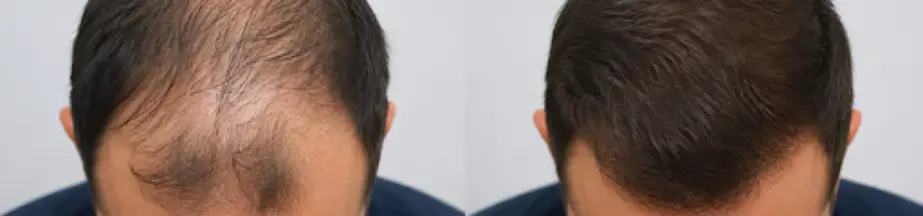
A hair transplant before and after journey moves through shedding, rest, and regrowth. Most people notice thin new strands by month four. Fuller, natural-looking density usually shows up by month twelve, and it keeps improving slightly after that too.
Did you know? According to a report by IMARC, the Indian hair transplant market size was valued at USD 307.83 Million in 2025 and is projected to reach USD 1,745.41 Million by 2034.
That single fact explains why patience matters so much during recovery. At Dr Ravali's clinic, patients often ask the same question in their first week: "When will I actually see something?" The honest answer is that hair transplant before and after results show up slowly, almost week by week, and rushing the process rarely helps.
If you have just booked your surgery or are still researching, this guide walks you through what really happens, month by month.
Key Takeaways
- In the starting phase after a transplant, you may notice hair shedding, which is quite normal as the follicles need to adapt to your new body before entering their growth phase again.
- If all goes smoothly, you will see hair growth in the transplanted area after about three to four months, when hair density will visibly change.
- Getting a full look from a hair transplant can actually take 12 months since the new hairs from the transplanted hairs have to go through the growth cycle to get thick and strong.
- If you want good results from the transplant, aftercare is a big part of the success, as it will be the main reason for the healing of the surgical incision and the follicle regrowth.
- You would be doing yourself wrong by trying to find the cheapest clinic regardless of its quality since the outcome of your transplant is greatly dependent on the team's expertise and knowledge.
Hair Transplant Growth Timeline You Should Know
Every patient heals at a slightly different pace. Age, hair type, and even stress levels can shift the timeline a bit. But the broad pattern of hair growth after transplant stays fairly consistent across most people.
Week 1 to Week 3: The Shedding Phase
Transplanted hair often falls out within the first three weeks. It can feel alarming the first time you see it. This is completely normal. The follicle itself stays alive under the skin, resting quietly before its next growth cycle. Do not panic if your scalp looks bare again, and definitely resist the urge to touch or scratch the area.
Month 3 to Month 4: New Growth Begins
Fine, thin hair starts pushing through around this point. It may look patchy or uneven at first, almost like new grass on a lawn. This stage marks the true start of visible hair transplant results, even if the mirror does not show much yet.
Month 6 to Month 12: Results Take Shape
Hair gets thicker and darker with each passing month. By month twelve, most patients see close to their final hair transplant outcome. Some people continue to notice small improvements up to month eighteen, especially around the hairline.
What Shapes Your Hair Transplant Outcome
Several factors decide how your results finally turn out. Genetics plays a big role here, but so does the care you take after surgery.
- Surgeon skill affects graft survival and the natural direction of hair
- Post-surgery care, including gentle washing and avoiding scratching
- Diet and sleep, which quietly support faster healing
- Smoking and alcohol, both known to slow down recovery
- Underlying scalp health before the procedure even begins
Small daily habits add up more than people expect. A rushed shampoo or a missed follow-up visit can set your progress back by weeks.
Month-Wise Recovery Snapshot
| Timeline | What Happens |
|---|---|
| Week 1-3 | Shedding of transplanted hair |
| Month 3-4 | Thin new hair growth starts |
| Month 6 | Noticeable thickness and coverage |
| Month 9 | Hair texture starts to match natural hair |
| Month 12 | Final results become visible |
Best Hair Transplant in Hyderabad: Why Expert Care Matters
Choosing the best hair transplant in Hyderabad is not just about comparing prices online. It is really about who handles your scalp with skill and honesty. A trained surgeon studies your hair pattern carefully before planning a single graft. This one step alone can change your final look completely, for better or worse.
Expert insight: Clinics that combine FUE and FUT techniques often give more natural results for advanced hair loss cases. A good clinic also tracks your progress with photos every few months, rather than promising a fixed number and moving on. This kind of tracking helps you see real, measurable change instead of relying on guesswork or memory.
It also helps to ask questions before you commit. How many grafts will realistically survive? What does aftercare actually involve? A clinic that answers clearly, without rushing you, is usually worth trusting.
Common Mistakes After a Hair Transplant
Many patients unknowingly slow down their own recovery. None of these mistakes are dramatic on their own, but together they add up.
- Washing hair too soon or scrubbing too roughly
- Skipping follow-up visits with the doctor
- Wearing tight caps that press on the healing scalp
- Exposing the scalp to direct sun in the first weeks
- Expecting full results within weeks instead of months
Avoiding these mistakes protects your hair transplant before and after progress and speeds up healing in a real way. Most of this comes down to simple discipline, not medical complexity.
Take the First Step Toward Fuller, Natural-Looking Hair!
A hair transplant takes time and patience, but the results can bring lasting, natural-looking change. Small, steady improvements each month lead to a fuller, more confident look by the end of the first year. There will be slow weeks and even a little doubt along the way, and that is fairly normal too. If you want expert guidance and a clear recovery plan, check the hair transplant before and after details. Actual results start with the right team standing behind you, not just the right procedure.
FAQs
1. How long does it take to see hair transplant results?
Most patients see visible growth by month four. Full results usually appear around month twelve, sometimes a bit later.
2. Does it make sense for transplanted hair to fall out first?
Yes, the loss of transplanted hair is quite normal, mainly within the first few weeks after surgery.
3. What factors have the greatest impact on the final result of a hair transplant?
You can really think of it as a three-way balance: the surgery performed by the doctor, the treatment of the hair grafts, and above all things, the personal health and overall state of the patient.
4. Is it possible to speed up regeneration of hair post-transplant?
One may expect the most effective regrowth by having a decent night's sleep, consuming a healthy, balanced diet that gives all necessary vitamins, and strictly following the aftercare plan given by the doctor.
5. How do I choose the best hair transplant in Hyderabad?
Look for a clinic with experienced surgeons, transparent before and after photos, and proper built-in follow-up care.