- By Dr. Ravali Yalamanchili
- 2026-11-23
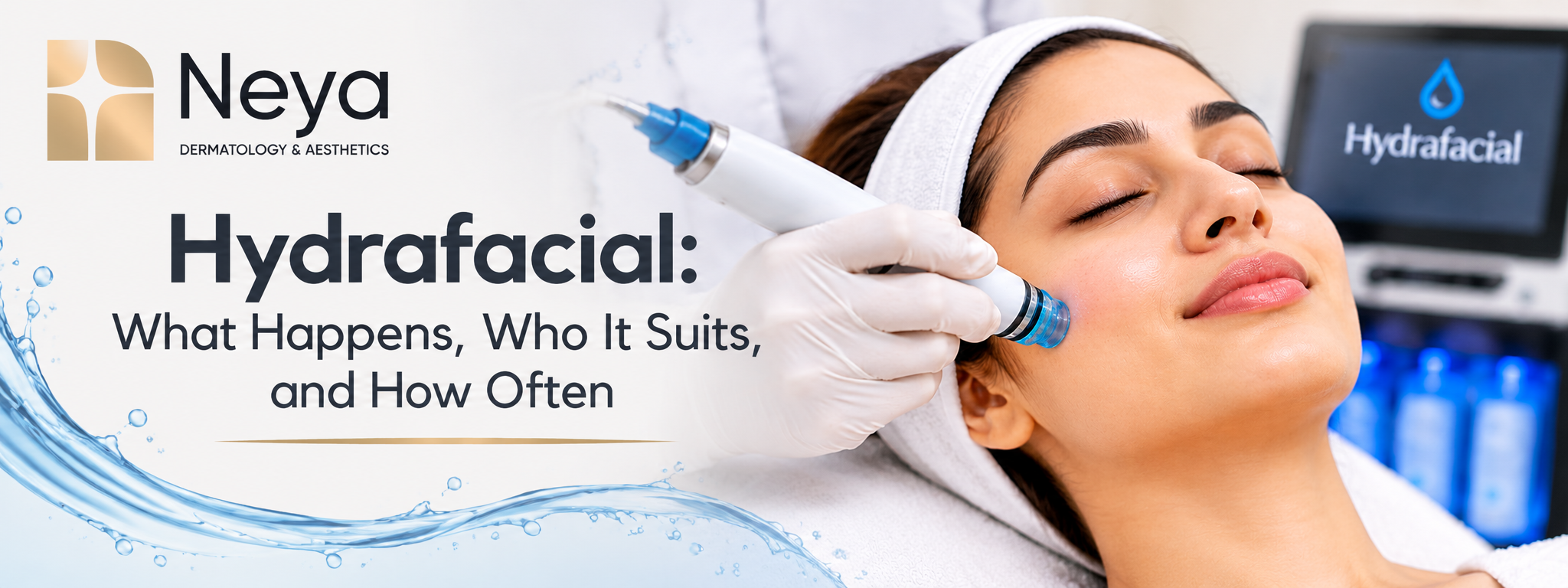
If you want clearer, smoother, and more hydrated skin without harsh peels or long recovery time, a Hydrafacial is worth understanding. It is a non-invasive facial that cleanses, exfoliates, extracts impurities, and infuses hydrating serums in one session.
Did you know? A typical Hydrafacial takes only about 30 to 60 minutes, yet it combines cleansing, exfoliation, pore extraction, and serum infusion in a single appointment.
At Dr Ravali, the goal is to make advanced skin care simple, comfortable, and tailored to your skin type.
Key Takeaways:
- A Hydrafacial cleanses, exfoliates, extracts, and hydrates the skin in one session.
- It usually takes 30 to 60 minutes and requires little to no downtime.
- It suits many skin types, especially people with dullness, dryness, congestion, or mild texture concerns.
- Avoid treatment during active rashes, sunburn, open wounds, or irritated skin.
- Monthly sessions are commonly recommended for maintenance, though your provider may adjust the schedule.
- Sunscreen and gentle aftercare help protect your results.
What Is a Hydrafacial?
A Hydrafacial is a multi-step skin treatment that uses a specialized handheld device. It gently removes dead skin cells, clears oil and debris from pores, and delivers hydrating and antioxidant-rich serums. Many people looking for a hydrafacial in Hyderabad choose it because it is comfortable, quick, and suitable for a wide range of skin types.
Unlike a traditional facial, it does not rely on manual squeezing or aggressive scrubbing. The device uses controlled suction and serum flow to clean the skin more comfortably.
It is commonly chosen for:
Dull or tired-looking skin
Dryness and uneven texture
Blackheads and congestion
Excess oil
Mild acne concerns
Fine lines and early signs of aging
Uneven tone or sun-related dullness
The treatment is designed for many skin types, including dry, oily, combination, and sensitive skin. However, a proper skin assessment is always important before starting.
What Happens During the Treatment?
A Hydrafacial follows a structured process. Most sessions take between 30 and 60 minutes, depending on the add-ons and the condition being addressed.
Step 1:Cleanse and Exfoliate
Your provider cleanses the skin to remove makeup, sunscreen, sweat, and dirt. Gentle exfoliation then lifts away dead skin cells, revealing fresher skin and preparing pores for extraction.
Step 2:Extract and Clear Pores
The device uses gentle suction to remove blackheads, excess oil, and impurities. It feels like a light pulling or tingling sensation and is usually more comfortable than manual extraction.
Step 3:Hydrate and Protect
Finally, hydrating serums with ingredients like hyaluronic acid, antioxidants, and peptides are infused into the skin. This leaves your skin plump, calm, refreshed, and naturally glowing.
Who Should Consider It?
A Hydrafacial suits people who want a gentle but effective skin refresh. It is especially helpful if your skin feels congested, dehydrated, rough, or dull.
You may be a good candidate if you:
- Want clearer pores without aggressive extractions
- Have dry patches or rough texture
- Experience frequent blackheads or oil build-up
- Want a glow before a wedding, event, or vacation
- Prefer a treatment with little to no downtime
- Are beginning to notice fine lines or uneven texture
It can work for younger skin dealing with occasional breakouts as well as mature skin affected by dryness, sun exposure, or early aging.
When to Wait or Avoid It
A Hydrafacial is generally gentle, but it is not right for every skin situation. Providers usually avoid treating active rashes, open wounds, sunburn, or highly irritated skin.
You should speak to a dermatologist first if you have:
- Active acne cysts or infected breakouts
- Rosacea flare-ups
- Open cuts, cold sores, or wounds
- Recent chemical peels or laser treatment
- A known allergy to skincare ingredients
- Very reactive or compromised skin
A qualified provider will assess your skin before recommending the treatment. This helps prevent irritation and ensures the serums match your needs.
How Often Should You Get One?
For general skin maintenance, most providers recommend a Hydrafacial once a month. This works well because skin naturally accumulates dead cells, oil, and environmental debris over time.
Some people benefit from sessions every four to six weeks. If you are targeting congestion, acne-prone skin, or pigmentation, your provider may suggest a more frequent initial plan before moving to monthly maintenance.
A practical schedule looks like this:
- First-time clients: One session to assess how your skin responds
- General glow and hydration: Once every four to six weeks
- Congested or oily skin: Monthly, or as advised by your provider
- Special events: About one week before, if your skin tolerates treatments well
- Ongoing skin health: Regular sessions combined with a good home routine
Results often last from one to four weeks. Consistency matters more than doing one intense session and then stopping. If you are booking a hydrafacial in Hyderabad, ask your provider to build a schedule around your skin type and goals rather than a fixed package.
What Results Can You Expect?
Many people notice smoother, brighter skin immediately after the session. Pores may look cleaner, and the skin often feels softer and more hydrated.
However, a Hydrafacial is not a one-time cure for deep acne scars, severe pigmentation, or significant sagging. It works best as part of a broader skin-care plan.
You may notice:
- A healthier glow
- Softer skin texture
- Reduced surface congestion
- Better hydration
- Less dullness
- A more even-looking complexion
For longer-lasting improvement, follow your provider’s advice on sunscreen, moisturizer, and active ingredients. Protecting your skin after treatment is just as important as the facial itself.
Aftercare Tips for Better Results
Your skin may be slightly more sensitive to sunlight after treatment. Daily sunscreen is essential.
For the first 24 to 48 hours, keep your routine simple:
- Use a gentle cleanser to wash your face.
- Apply a hydrating moisturizer to keep skin comfortable.
- Wear broad-spectrum sunscreen every day.
- Avoid strong exfoliants for a few days.
- Skip retinol or strong acids unless your provider advises.
- Avoid saunas, steam rooms, and heavy sweating.
- Do not pick, scrub, or touch your skin unnecessarily.
Mild tightness, redness, or sensitivity can happen in some people. These effects are usually temporary and settle within a day or two with basic care.
Is It Worth the Cost?
A Hydrafacial is more than a luxury facial. It combines exfoliation, extraction, and hydration in one session, and its value depends on your skin goals and how regularly you maintain the results.
When researching the hydrafacial price in Hyderabad, check what is included, such as serums, boosters, and LED therapy. Knowing the hydrafacial cost in Hyderabad before booking helps you pick a plan that suits your budget. Choose a provider who assesses your skin first and offers proper aftercare.
Hydrafacial vs. a Regular Facial
|
Feature
|
Hydrafacial |
Regular Facial |
| Main method |
Device-based cleansing, suction, and serum infusion |
Manual cleansing, massage, masks, and extraction |
| Extraction |
Gentle vacuum-assisted extraction |
Often manual extraction |
| Downtime |
Usually none |
Usually none, but irritation is possible |
| Best for |
Congestion, dullness, dehydration, texture |
Relaxation and general skin maintenance |
| Customisation |
Serum and booster-based |
Product and technique-based |
Both treatments can support healthy skin. The right choice depends on your concerns, sensitivity, and the advice of your skin specialist. The hydrafacial price in Hyderabad is often higher than a regular facial because of the device, serums, and added customization. Still, many people find the visible results and comfort worth it.
Choose the Right Skin Plan
A Hydrafacial can be a valuable addition to your skin-care routine when it is chosen for the right reason and performed safely. It helps improve dullness, congestion, dryness, and uneven texture without harsh peeling or downtime.
The best results come from a personalized plan, regular sessions, and daily sun protection. Focus on keeping your skin clean, hydrated, and healthy over time rather than chasing a quick fix.
Ready to refresh your skin? Book a consultation with Dr. Ravali today and get a Hydrafacial plan customized to your skin type and goals.
Frequently Asked Questions:
1. Does a Hydrafacial hurt?
No, most people find it comfortable. You may feel mild suction, tingling, or a cool sensation, but it should not be painful.
2. Can I wear makeup after a Hydrafacial?
It is best to avoid makeup for the rest of the day. This allows the skin to stay clean and absorb the hydrating serums properly.
3. How soon will I see results?
Many people see an immediate glow and smoother texture. Deeper concerns such as congestion or uneven tone may need multiple sessions.
4. Is Hydrafacial safe for sensitive skin?
It can be suitable for sensitive skin, but the serums and treatment intensity should be adjusted. Always inform your provider about allergies, rosacea, or recent skin treatments.
5. Can I get a Hydrafacial if I have acne?
Yes, mild acne and congestion may improve with gentle extraction and the right serums. Active cystic acne, infected lesions, or inflamed skin should be assessed by a dermatologist first.